


Permanent Dental Implants & Dentures
Dental implants are an effective way to replace missing teeth. When teeth are lost because of disease or an accident, dental implants may be a good option. At Dental Arts of Westwood, we provide dental implant solutions for patients in Westwood, MA and nearby communities including Dedham, Norwood, Canton, Needham, Medfield, and Dover, helping restore both function and confidence with long-lasting tooth replacement options.
To learn more about our office or schedule a consultation, visit our contact page.
Dental Implants and Tooth Replacement in Westwood, MA
Benefits
- Implants offer firm support to man-made teeth. Dentures, bridges or single teeth attached to the implants won’t slip or shift in your mouth – a very important benefit when eating and speaking.
- This secure fit also helps man-made teeth feel more natural than typical bridges or dentures.
- Some people may find implant-supported dentures more comfortable than dentures that do not use implants.
- Where teeth are missing, dental implants also help keep the jawbone from shrinking.
- Implants are a good value, because they can last a lifetime with good care. Patients in Westwood, MA and surrounding communities often choose dental implants because they provide a stable, natural-looking solution for replacing missing teeth.
You may want to choose dental implants if you:
- Hide your smile because you have missing teeth
- Wear dentures that are uncomfortable
- Are dissatisfied with your removable partial dentures
- Want to keep your other teeth intact
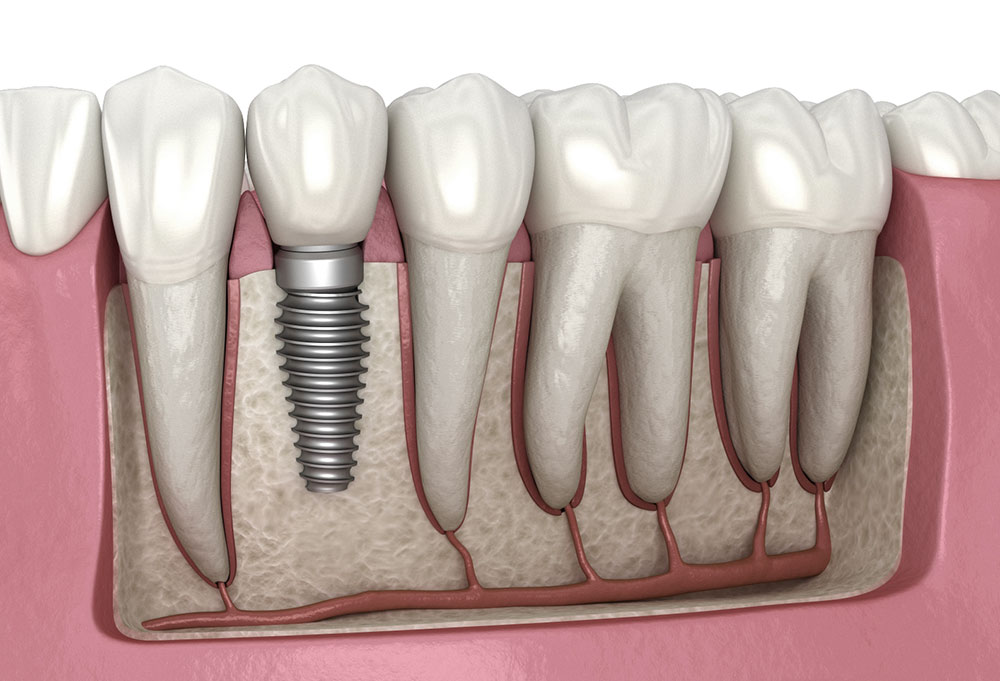
Types of Dental Implants
Single Tooth
The single tooth implant replaces the missing tooth’s roots. A single tooth implant is a stand-alone unit and does not involve treating the teeth next to it. If you are missing one or more teeth, there are many reasons why you should replace them:
- You may not like how the gap looks when you smile.
- Missing teeth may affect how you speak.
- A missing molar tooth can make it harder to chew.
- When a tooth is lost and not replaced, the teeth around it can shift.
- Bone loss can occur around the missing tooth. This may cause the remaining teeth to become loose over time.
- Loss of teeth and bone can make your face sag. You may look older.
Patients replacing damaged or missing teeth may also explore our advanced restorative dental procedures for additional smile restoration options.

Implant-Supported Bridge
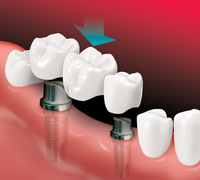
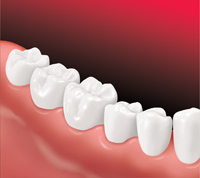
Dental implants can be used to support a bridge when several teeth are missing. The implant-supported bridge replaces the lost natural teeth and some of the tooth roots. Unlike traditional bridges, an implant-supported bridge does not need support from the teeth next to it.

Implant-Supported Dentures
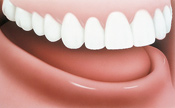
If you are missing all of your teeth, an implant-supported denture can replace the missing teeth and some of the tooth roots. Because the dental implants integrate (or “fuse”) with the jawbone, an implant-supported denture tends to be comfortable and stable, allowing you to bite and chew naturally.
Patients struggling with loose or uncomfortable dentures may also benefit from our periodontal care services to support long-term oral health and implant stability.


Implant Placement Process
Many kinds of implants are available. Treatment can take one day, several months, or somewhere in between. You and your dentist can discuss which type of implant is best for you. Implant treatment usually involves three basic steps.
Placement of the Implant
Your dentist will carefully locate where the implant should be placed, using x-rays or other pictures. Then the dentist surgically places the implant into the jawbone. You may have some swelling and/or tenderness after surgery. Your dentist may prescribe pain medicine to ease the discomfort. During the healing process, your dentist may tell you to eat soft foods.
Healing Process
What makes an implant so strong is that the jawbone grows around it and holds it in place. This process, called osseointegration (OSS-e-o-in-te-GRAY-shun), takes time. It may be several months before the implant is completely integrated into the bone. Then the patient can get the permanent replacement tooth or teeth. In many cases, the implant and temporary replacement teeth can be placed in one visit.
Placement of the Prosthesis (Replacement Tooth or Teeth)
For a single tooth implant, the dentist custom-makes a new tooth for you, called a dental crown. It is designed to look just like your other teeth. Implant-supported bridges and dentures are also custom-made to look like natural teeth and to fit your mouth. The replacement teeth are attached to the implant posts. Replacement teeth usually take some time to make. In the meantime, your dentist may give you a temporary crown, bridge or denture. This will help you eat and speak normally until the permanent replacement teeth are ready.
Not loving the gaps when you smile? Tired of uncomfortable or unsatisfactory dentures? Our Westwood, MA dental team can help restore your smile with modern dental implant solutions.
Or learn more about our advanced dental procedures, periodontal treatment, and cosmetic dentistry services. Ready to restore your smile with dental implants? Visit our contact page to schedule your consultation with our experienced dental team.
What Patients in Westwood Are Saying
Frequently Ask Questions
Most patients benefit from professional dental cleanings every six months. At Dental Arts of Westwood, we personalize cleaning schedules based on each patient’s oral health needs.
Yes. We welcome new patients in Westwood, MA, as well as nearby areas such as Dedham, Norwood, Canton, Needham, Medfield, and Dover.
Routine dental exams typically include an oral health evaluation, digital X-rays if needed, gum health assessment, and professional cleaning.
Yes. Regular exams and cleanings help detect issues early and reduce the risk of cavities, gum disease, and more complex dental treatments.